
One of the most powerful tools a Product Manager can have isn’t in the roadmap, the backlog, or even the data; it’s in the story. Because at every core of the role, you’re always telling one.
You’re crafting a vision for your team? That’s a story of a better future where the product exists. You’re writing a PRD? Another story! This time of why the product should exist and how you’ll bring it to life. You’re presenting metrics to stakeholders? I’ll call this a story of what happened, why it mattered, and where you’re headed next.
Strong PMs know this isn’t about being naturally “inspiring.” They consciously work on their storytelling. They bring structure, clarity, data, and emotion. They introduce a problem, set the stage with user context, and guide you to a satisfying resolution. It’s not fluff. There’s neuroscience behind it. Good stories activate the brain, build empathy, and even trigger dopamine. (check more in Paul Zak’s research).
In this article, I’ll share a few storytelling tools I found especially useful from IDEO U’s Impactful Presentations course.
Leveraging Story Arcs for Your Next Presentation
A story arc reflects the flow of your story. Knowing which arc you’re using helps you guide your audience with intention.
The Four C’s: Context, Conflict, Climax, Closure

Use this arc when your presentation has a clear problem and solution. It helps you manage your audience’s energy by building momentum up to the climax (the high point) and then resolving with closure.
It works especially well in elevator pitches or when presenting your product as a solution to a real, defined user problem.
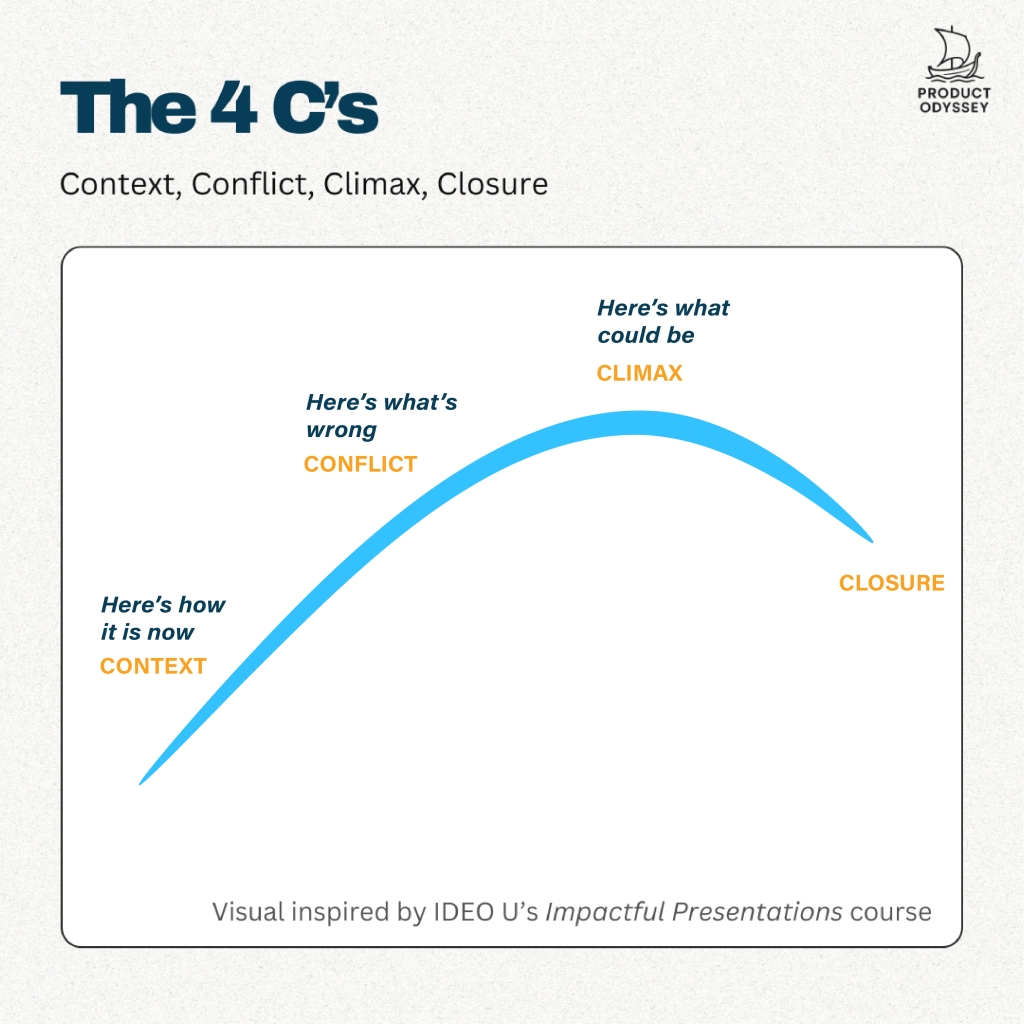
A variation of this arc emphasizes the vision. How would the world could look like if your product succeeds? This shifts the focus slightly from the immediate solution to the larger outcome, but the structure stays similar.
Start in the middle

Start in the middle. Drop your audience into the action with something surprising or intriguing, and let them work backward with you.
Example: “1,000,000 people are now 4x more productive thanks to Y. How did we get here?”
This structure skips the slow build and instead reveals the backstory and context as the story unfolds. It’s great for grabbing attention fast and maintaining curiosity.
The Hero’s Journey

Perfect when you’re introducing a new idea or change, especially to a skeptical audience.
The hero (your user, your team, or even you) faces a challenge, overcomes adversity, and transforms. It’s compelling because it creates emotional investment and shows the value of change through experience.
This arc was adapted by Visme in their e-book A Non-Designer’s Guide to Creating Memorable Visual Slides and draws from Joseph Campbell’s classic The Hero with a Thousand Faces.
Rags to Riches

A classic transformation arc: things start bad, then get better. Use this when you want to deliver a message of hope or highlight a big improvement.
It works well if your product helped a team or user go from a frustrating situation to success. The contrast is key. Just make sure the “before” state is compelling.
Cinderella Story

This one builds on Rags to Riches but adds a twist. After initial success, there’s a setback before a final rise.
Use this to show resilience and the ups and downs of product development, it makes the final victory feel earned.
Man in Hole
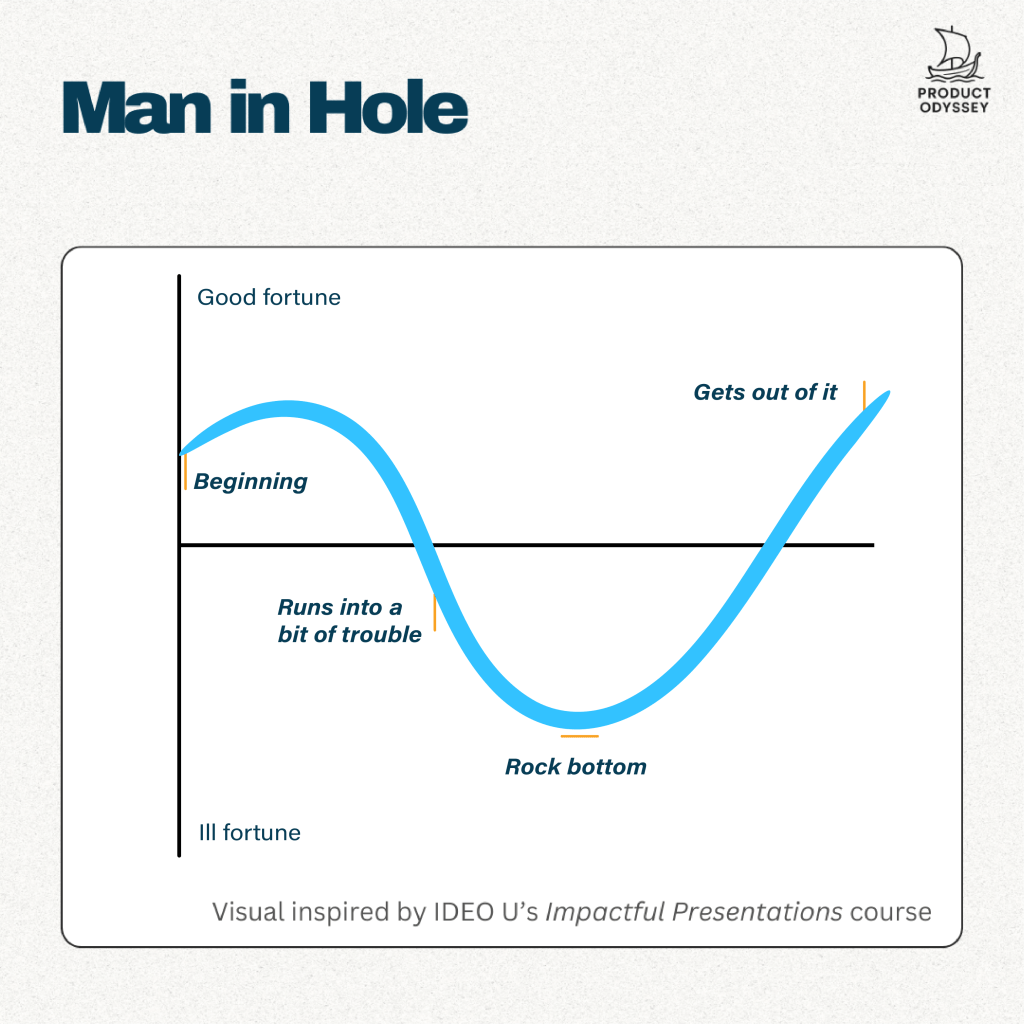
Everything is fine, until it’s not. The protagonist encounters an unexpected problem and has to climb out.
This arc is great for telling stories about navigating setbacks or unexpected complexity in product work. It starts from stability, dips into chaos, and ends in recovery.
Final Thoughts
Storytelling isn’t a soft skill, it’s a core part of how you lead, persuade, and build. Knowing how to choose and shape a story arc helps you bring your audience along for the ride, whether you’re pitching a product, writing a spec, or updating your team.
The best PMs aren’t just decision-makers. They’re storytellers in disguise.
 Product Odyssey